What to Feed My Betta Fish


Figuring out the best diet for your betta fish can be quite a challenge.
There are many different brands and varieties of betta fish food available in pet/aquarium stores and online, but unfortunately, not all of them are high-quality or even good to keep your betta healthy!
If you're struggling with what, when, or how to feed your betta fish, you're definitely not the only one.
Keep reading for more information on how to find the best betta fish food available for your fish, how to feed your betta a high-quality diet, and learn about all of the different types of fish foods that are out there.
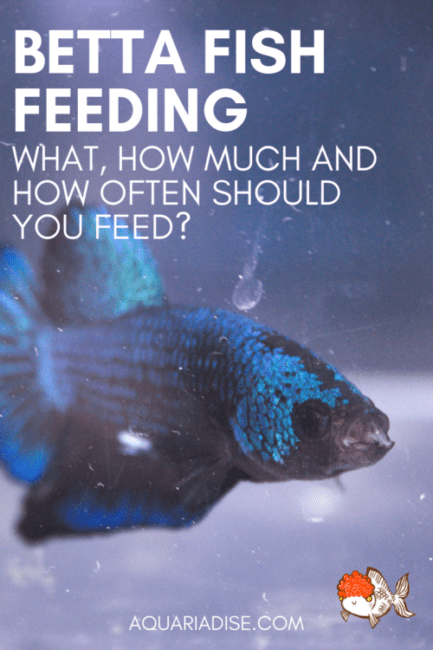
What is the best food for your betta fish?
The most important thing you need to keep in mind when you're looking for the best possible betta fish food is that these fish are naturally carnivores and require a lot of protein.
Their upturned mouth actually reveals what they like to eat most in the wild: insects and insect larvae that have fallen into the water or that are floating on the surface.
Betta fish can't survive on plant-based foods and, contrary to what some fish stores will tell you, they do not eat plant roots. The best betta fish diet would include a variety of freeze-dried foods, live foods (mosquito larvae, brine shrimp, bloodworms), and betta flakes and/or pellets that are high in crude protein.
Betta fish flakes and pellets
As with pretty much any fish species, variety is the key to your betta's diet.
Most tropical fish and betta fish keepers choose to use a high-quality pellet or flake food as a staple, though it is not uncommon for betta fish to refuse flakes. It is important to keep in mind that betta fish tend to be messy eaters, and any uneaten food will sink to the bottom of the tank; make sure to remove any excess food as soon as you see that your betta has finished eating.
It is also important to buy fish food that is specifically meant for betta fish; betta fish food is exceptionally high in crude protein and tropical fish flakes won't give your betta the nutrients it truly needs to thrive.
More information on what makes a fish pellet or flake 'high quality' can be found below.
Because feeding nothing but this staple food wouldn't make for the best diet, it's a good idea to also get some other different types of food to offer your betta as well.
Live food
Some betta keepers choose to feed live foods that are usually sold at fish stores; feeding live food tends to lead to some of the healthiest betta fish. The most popular live foods include brine shrimp, mosquito larvae, and bloodworms.
While this food will make your betta fish get some activity (betta fish feeding can be very exciting to watch!), you are also introducing the risk of bringing parasites into your tank. Because of this same threat, it is never advised to feed your betta fish anything that you may have found outside.
So does that mean that you should never try feeding your betta fish live foods? Of course not!
This has been a common problem in fish husbandry for a long time and hobbyists have learned how to work around it. The best way to have a steady flow of reliable live foods to feed your betta fish is by culturing them yourself.
For safe and fun live betta food, you can try hatching your own brine shrimp eggs or wingless fruit flies.
By culturing your own live food, you can regulate what they eat–and in turn, regulate the nutrients your betta fish will be getting when it eats the food–and monitor the overall health of the colony. If you start to realize that numbers are decreasing, you can address the problem and not leave unsolved problems up to chance when buying from the fish store.
The second best way to get reputable live foods is by shopping at the best reputable fish stores. Many times the food you are buying is actually the same food they use to feed their fish; if it isn't, don't be afraid to ask why they might be feeding something different.
And never be ashamed to ask to see if you can observe a staff member feeding the fish! You always want to make sure that the fish is willingly feeding and you get the chance to see its preferred food.
If your betta fish doesn't like live food or it's too hard to get or cultivate on your own, you can always try feeding frozen betta foods.
Frozen food
There are plenty of frozen fish food options available if your betta fish refuses fish flakes, and most are identical to the variety that comes with live foods.
I personally always have at least two types of frozen food (white/black mosquito larvae, bloodworms, brine shrimp) lying around to offer my betta fish variety from time to time. These foods make a great betta meal when thawed properly and are easy to store!
For the most part, any fish food that comes live also comes frozen; there is just the convenience that frozen foods last longer and can be better rationed at feeding time.
Whether it's brine shrimp, bloodworms, or mosquito larvae, make sure to follow the instructions on the back of the package before throwing the cube into the tank water! Typically you will want to take some water out from your tank, put the cube in, and wait for a few minutes until the cube starts to dissolve and fall apart.
Never use tap water during this process as that will indirectly add nutrients and heavy metals into your tank water that you may not want, affecting your overall water quality and the health of your fish!
One of the main problems fish enthusiasts run into is that frozen food can be messy; these cubes surprisingly contain a lot of food, and it's easy for pieces to be quickly carried away by the water current under decorations and into the filter.
It is best if you turn all equipment off during feeding time so that you can remove any excess food to prevent leftovers from breaking down and causing future water quality issues.
Freeze dried food
If your betta fish doesn't eat fish flakes and you don't have access to live foods or frozen foods, there is always the last alternative: freeze-dried foods. These foods will typically be the same, with a selection of bloodworms, mosquito larvae, and brine shrimp, but all of the moisture has been removed.
While freeze-dried foods are an easy alternative, they don't always provide the best supplementation because so much nutritional value has already been taken; there is also a common issue that these foods tend to expand in the gut of the betta fish after being eaten, causing your fish to possibly bloat or become constipated.
The simple fix to this is soaking the pieces of food in tank water or other prepared liquid before feeding. However, you never have to worry about introducing parasites into your tank and it's an easy food to give if you don't have many other options!
High-quality betta food
With all the betta fish foods that all claim they are the best, it can be difficult to figure out which one to actually buy. Luckily, the ingredient list can tell you a lot!
As mentioned before, betta fish are carnivores that need a very high protein diet. However, protein-based ingredients, like fish, are quite expensive; more expensive than cheaper plant-based ingredients like wheat or soy.
Many manufacturers of betta food, therefore, choose to use more plant-based ingredients and other cheap options like fishmeal instead of using the whole fish; fishmeal is all the leftover bits that fisheries don't have any other use for after all the quality pieces have been sold to market.
The downside of this, of course, is that the food is not the absolute best that it could be for your betta.
A betta food that lists more plant-based ingredients and fishmeal at the top of the ingredient list is bad quality and you should avoid it. A betta food that lists "whole" fish products as the first few ingredients is a better idea and will lead to a much healthier fish.
An example of a popular and good-quality staple fish pellet is New Life Spectrum Betta Formula.
Note: many websites list that flakes are not good betta food. This is because many flakes are of bad quality and contain too many plant-based ingredients and fillers.
However, not all flakes are inherently bad: the same rules apply and there is nothing wrong with high-quality betta flake food.
The 5 best betta foods
New Life Spectrum Betta Formula

New Life Spectrum Betta Formula semi-floating pellets are the perfect food for a balanced diet.
These small pellets (<1 mm) are made from Antarctic krill, herring, squid, New Zealand mussel protein, seaweed, kelp, micro algae, natural spirulina, as well as a fruit and vegetable extract. This includes garlic which can help bolster immunity.
The guaranteed analysis reads:
- 37% min. crude protein
- 5% min. crude fat
- 4% max. crude fiber
- 10% moisture
- 8% ash
- 8000 IU/kg Vitamin A
- 2500 IU/kg Vitamin D
- 200 IU/kg Vitamin E
These pellets can sometimes be too big and hard for some betta fish to eat, so hobbyists soak them before feeding. Otherwise, the ingredients on the packaging are recognizable and guaranteed analysis meets our standards for a healthy betta.
Northfin Food Betta Bits
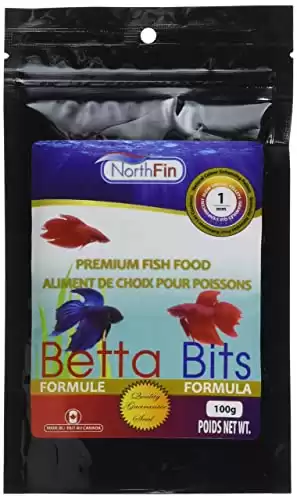
Northfin is a lesser-known aquarium brand that has delivered high-quality equipment and supplies for years. This includes their food for betta fish.
Northfin Food Betta Bits is expensive, but one of the best foods you can get for your betta fish. They are comparable to New Life Spectrum Betta Formula pellets but sink faster.
The ingredients include whole Atlantic krill meal, high omega-3 DHA herring meal, whole sardine meal, and wheat flour. For a balanced diet, Northfin Food Betta Bits also includes organic kelp and spirulina, as well as garlic for a bolstered immunity.
The guaranteed analysis reads:
- 45% min. crude protein
- 5% min. crude fat
- 5% max. crude fiber
- 9% moisture
- 9% ash
- Vitamin A acetate
- Vitamin B12 supplement
Northfin Food Betta Bits is very high in protein, so feedings should be spaced out. However, these floating pellets are perfectly sized and easy on betta digestive systems.
Omega One Betta Buffet Flakes
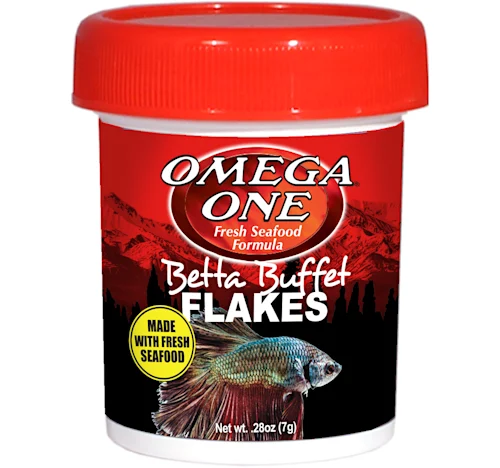
If your betta fish doesn't like pellets, then Omega One makes a great flake alternative.
The first few ingredients listed on Omega One Betta Buffet Flakes are identifiable salmon, whole herring, wheat flour, and whole shrimp. There is also some protein from greens, including pea protein, kelp, and spirulina for a natural diet.
The guaranteed analysis reads:
- 43% min. crude protein
- 12% min. crude fat
- 2% max. crude fiber
- 8.5% moisture
- 8% ash
- Vitamin A Supplement
- Vitamin B12 Supplement
- Vitamin E Supplement
This product may contain artificial coloring and can be high in protein for betta fish, so it may be best used as a regular supplement. However, this food is packed full of natural proteins that help keep betta fish strong and happy.
Omega One Betta Buffet Flakes are also available in pellet form.
Hikari Betta Bio-Gold
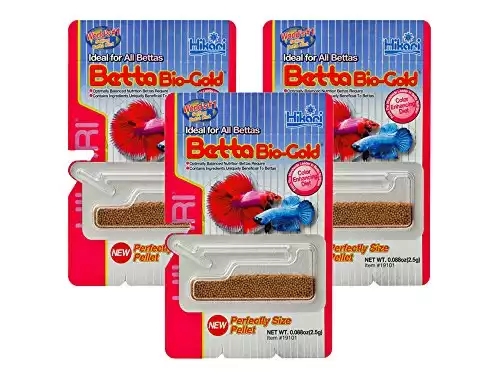
Hikari makes feeding your betta fun. Not only is Hikari Betta Bio-Gold innovatively designed to dispense pellets, but it's also good food for your fish!
Hikari is a very popular aquarium brand, and their products live up to expectations for the most part.
While high-quality and rich in protein, the first ingredient of Hikari Betta Bio-Gold is fish meal. This is followed by wheat flour, soybean meal, rice bran, potato starch, and eventually, krill meal.
The guaranteed analysis reads:
- 38% min. crude protein
- 4.0% min. crude fat
- 3.0% max. crude fiber
- 10% max. moisture
- 12% ash
- 0.7% min. phosphorus
- 19,000 IU/kg Vitamin A
- 2,900 IU/kg Vitamin D3
- 1,500 IU/kg Vitamin E
These floating pellets are fun to feed as long as you're able to get them out of the packaging. They also contain artificial coloring, so they may serve better as an occasional treat.
Fluval Bug Bites Tropical Fish Food

If you're looking for something different to feed your fish, then Fluval Bug Bites Tropical Fish Food might be your betta's new favorite food.
Fluval Bug Bites Tropical Fish Food are exactly what they sound like: pieces of bugs. These small granules are made from black soldier fly larvae, salmon, fish protein concentrate, green peas, and potatoes.
The guaranteed analysis reads:
- 40% min. crude protein
- 12.5% min. crude fat
- 5.0% max. crude fiber
- 10% moisture
- 9% ash
- 1.5% min. calcium
- 0.8% min. phosphorus
- 2,500 IU/kg Vitamin A
- 2,400 IU/kg Vitamin D3
- 75 IU/kg Vitamin E
These bug bites are naturally made and packed with protein. The unusual ingredients can help introduce a new source of food to hungry bettas.
How much and how often should you feed your betta?
Bettas are small fish that don't need a lot of food especially if you are feeding high-quality food. Two or three pellets/worms/etc. are enough for a day, although you can vary the frequency of feeding and the amount of food you give each time; skipping a day every once in a while is fine, and so is feeding twice on some days or dividing the food into 2-3 meals.
If your betta happens to be refusing food because of stress due to transport or illness, don't worry. A few days without eating won't do much harm.
If the fish is stressed from transport, leave the lights off to reduce stress and try again in a few hours with some worms instead of the less tasty-looking pellets.
If there doesn't seem to be anything outwardly wrong with your betta fish and you haven't transported it recently, check that the water parameters and temperature are correct; of course, there are days when your betta fish may just not want to eat, but this shouldn't last for more than a day otherwise.
How to not feed your betta fish
Keeping your betta fish well-fed and happy may seem easy, but there are actually quite a few (beginner) mistakes to avoid! These are a few of them:
- Don't follow the 'feed as much as your fish can eat in five minutes rule. Betta fish (and other fish) will almost always accept food even when they're not hungry, so this is a one-way ticket to an obese fish.
- Don't reward jumping behavior with food. It's very interesting and exciting to watch a betta jump for food, but it's quite dangerous as the fish could accidentally jump out of the aquarium or hurt itself on the lid.
- Don't use holiday/weekend fish food blocks when you are planning to go away for an extended amount of time; these can quickly malfunction and pollute the water, leaving you to come home to murky water and most likely, a dead fish. As long as your betta is well-fed, a few days without food are harmless. If you are going to be gone for more than a few days, it may be worthwhile to have someone keep up with feeding your betta on its regular schedule.
- Don't leave uneaten betta fish food in your aquarium; remove it immediately. Rotting food can cause bad water quality and will eventually become very dangerous to your betta as ammonia builds in the tank.
- Don't feed too much freeze-dried food. It's fine as a snack from time to time, but it's known to cause constipation and other problems when fed regularly.
- Don't thaw and re-freeze frozen food. This promotes explosive bacteria growth! Any leftover thawed food should be disposed of and not fed to your betta.
Why does my betta fish 'throw up' its food?
You may have experienced your betta fish 'throwing up' its food; there are a few reasons why this may be happening, and most of the time it's actually because of the betta fish!
You could be feeding your fish the best betta foods available, but honestly, some bettas are just that picky. Many betta fish were raised eating one type of food at the store and are reluctant to initially try anything else.
If your betta still refuses to eat after a couple of days, there are a few ways to get around this problem.
The first method you could try is by offering live food, especially bloodworms. Most betta fish won't say no to a couple of bloodworms! However, try to avoid feeding bloodworms too often as they do not have the best nutritional value and can be risky (and expensive) to feed as mentioned before.
The second way is by making the betta fish food more appetizing. Many hobbyists soak their betta foods in a garlic mix, such as Garlic Guard when they have a picky eater. This seems to spark their appetite just fine!
Lastly, your betta may be spitting out its food because the food is simply too big to swallow. You can try cutting up the pieces even smaller or soaking them in the garlic mix to help break them up.
If none of these methods work, your betta may have an underlying illness, parasites, or may even be constipated.
Continue to monitor your betta for any other signs of distress and treat accordingly. There are a few ways to treat a constipated betta either through peas or fasting, though it is best to do some research and keep trying until your betta gets better!
Conclusion
Your betta's diet is the key to having a healthy and colorful fish. There is a large selection of betta fish food out there, and a lot of it is not actually what your betta needs to thrive. Before picking up fish food, take some time to read the ingredients list on the back and ask yourself:
- What is the first ingredient listed?
- Is this food specifically betta fish food or is it meant for tropical fish?
- How can I offer my betta variety?
As long as you don't overfeed, your betta will be very appreciative of the different foods you give!
If you have any questions about finding the best betta food, the different types of betta food available, or have other betta fish feeding concerns, don't hesitate to leave a comment below!
Source: https://www.aquariadise.com/betta-food-feeding/#:~:text=Betta%20fish%20can't%20survive,are%20high%20in%20crude%20protein.
0 Response to "What to Feed My Betta Fish"
Post a Comment